|
Hadro
Zuidbaan 3512841 MD Moordrecht |

Magnetic Level Gauges
How Magnetic Level Gauges Work
Magnetic Level Gauges on the principle of communicating vessels; therefore, the level in the measuring tube is equal to the level in the tank. The measuring tube contains a float with a ring magnet enclosed within it. Because the float floats on the medium, the position of the ring magnet indicates the liquid level via the slats on the outside of the measuring tube.
The float in the measuring tube is completely pressure-free by design and has no magnetic or mechanical guidance. This makes this float safer than floats that are pressurized with gas beforehand. If necessary, depending on the pressure and specific gravity, Hadro can pre-pressurize the float for you.
Based on the process data below, it is easy to select a float that will remain afloat on the medium.
- Medium
- Specific gravity
- Workload
- Temperature
Materials Used in Water Level Gauges and Special Models
In addition to the standard models, custom models can be manufactured. Examples include units equipped with a coating (lining) such as:
- E-CTFE, PFA, or ETFA;
- equipped with a steam jacket;
- devices made of plastic or Hastelloy, Monel, titanium, or 6Mo.
For more information, please contact our technical advisors.
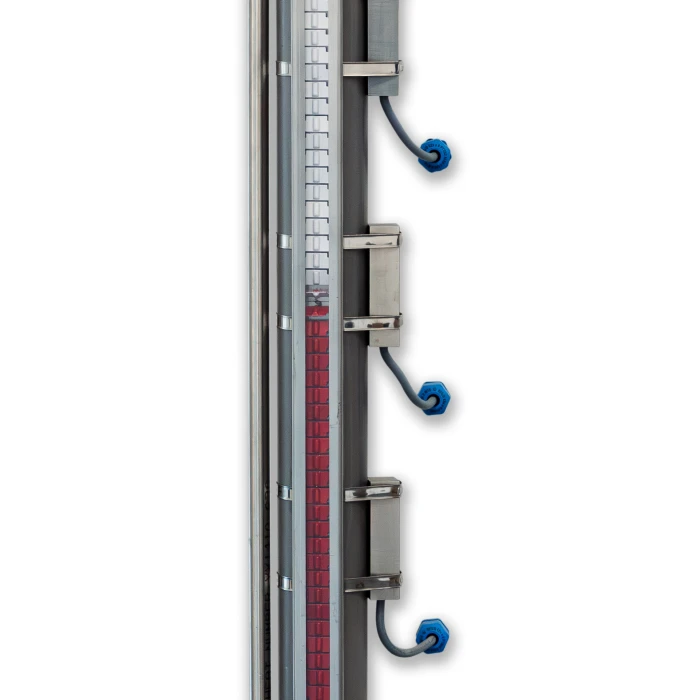
The Slats in a Magnetic Level Gauge
Each slat in the indicator rail is equipped with an embedded permanent magnet, making the device resistant to shocks, vibrations, and high temperatures. Even damp and/or corrosive environments are no problem for our Magnetic Level Gauges.
The magnetic level gauge is available with plastic or stainless steel slats. The slats can be housed in a plastic, aluminum, or stainless steel enclosure.
Because the slats are white on one side and red on the other, the liquid level is very clear and easy to read, even from a distance, even in dark areas.
Using the included “Templates,” you can easily set any limit values for your desired level.
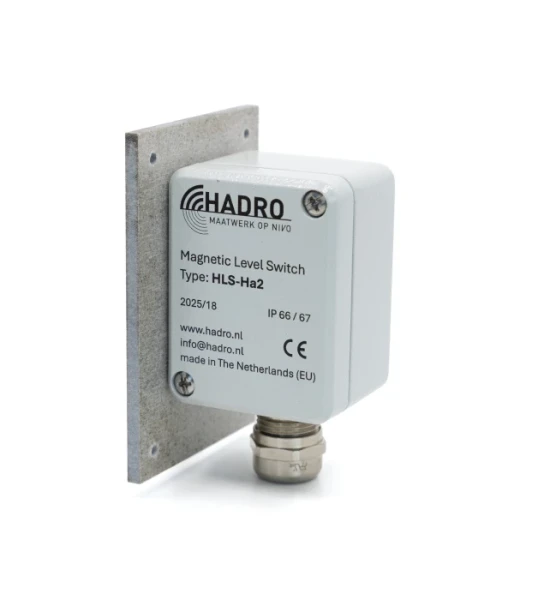
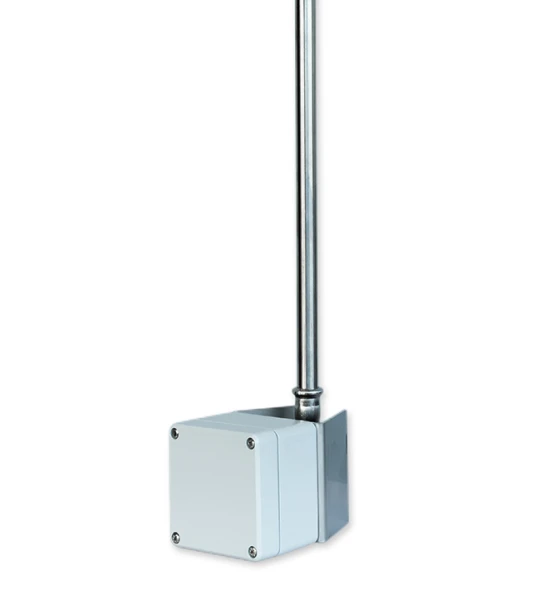
Magnetic switches can be used to generate an output signal. By using multiple switches, you can set up a pump control system (pump on/off) or configure a high/low alarm.
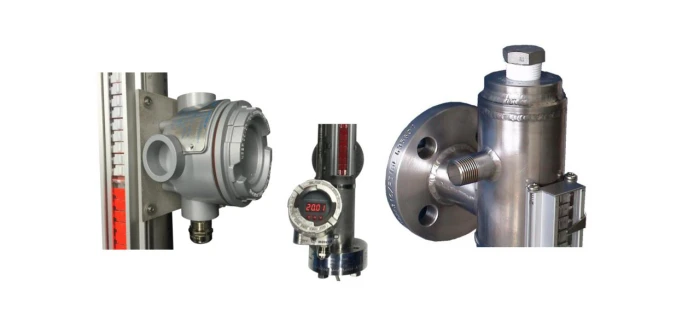
In addition to or instead of the switches, a transmitter can also be installed; this transmitter provides an output signal of 4–20 mA.
Magnetic Level Gauges also suitable for indicating the interface between two different liquids in a tank.
In addition to PED, our devices are also approved by LRS and BV for maritime applications.
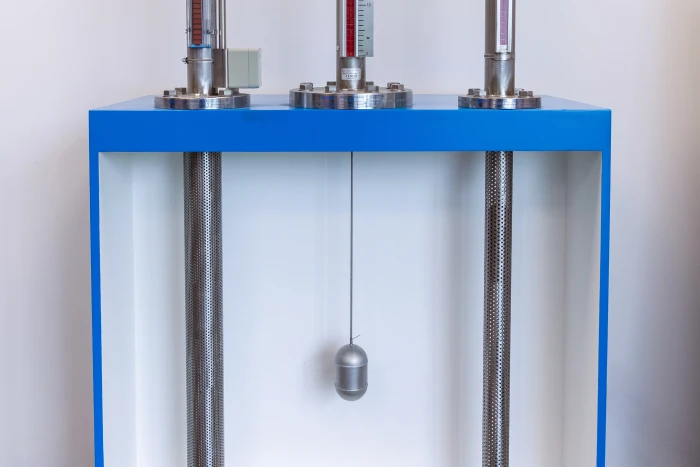
Magnetic Level Gauges
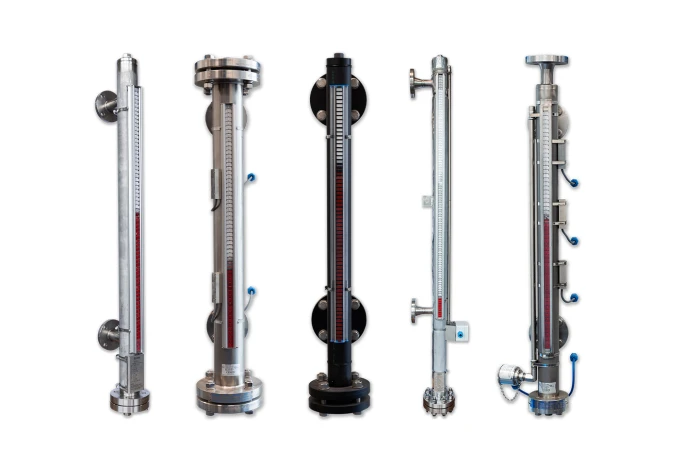
To meet all your needs, we offer a variety of standard models, namely:
- Model D
- Model F
- Model M
- Model R
- Model L
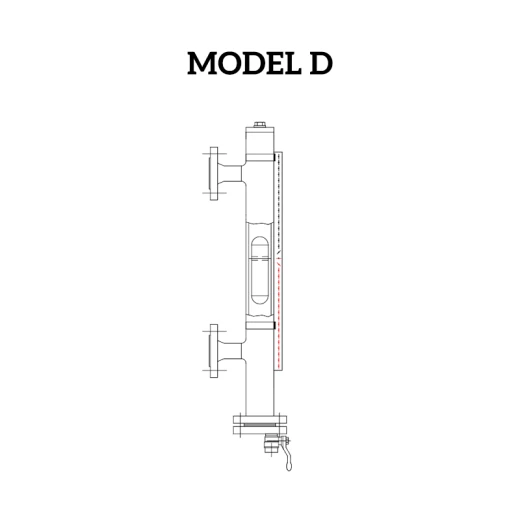
Model D Magnetic Level Gauge
with two or more flange connections for installing on the side of a tank. This model is suitable for a wide variety of applications, such as condensate tanks.
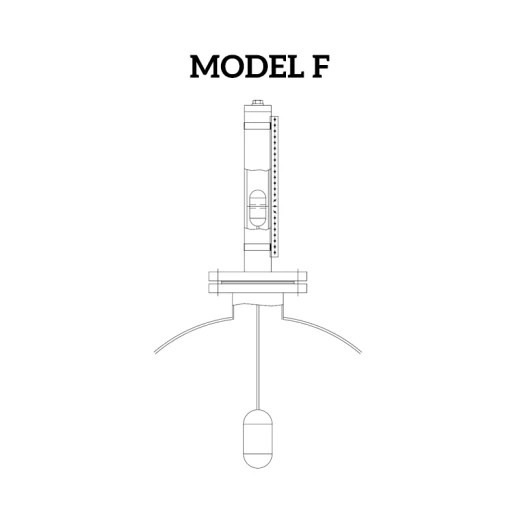
Model F Magnetic Level Gauge
With a single process connection on the bottom. This model is suitable for Installing a tank. This model is often used on underground storage tanks.
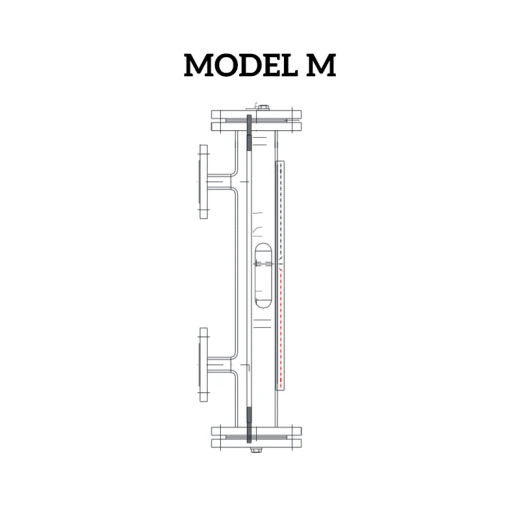
Model M Magnetic Level Gauge
With two or more process connections for Installing the side of a tank. The design is ideal for volatile liquids.
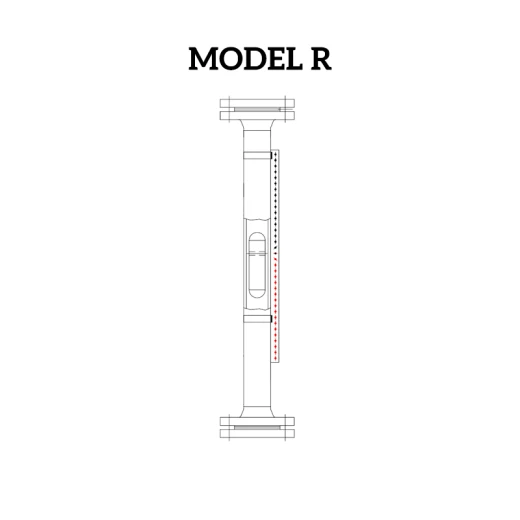
Model R Magnetic Level Gauge
With two process connections at each end, this model is suitable for Installing two pipes.
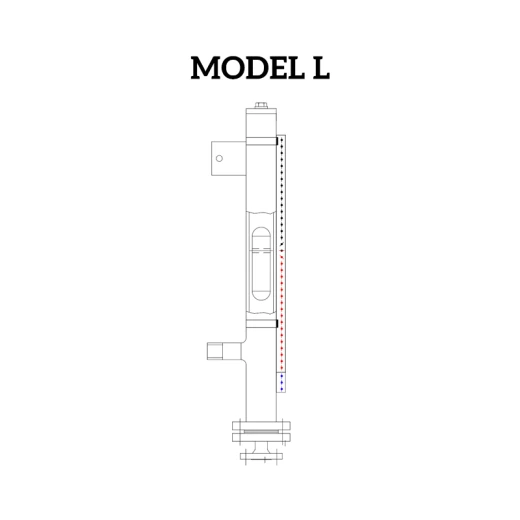
Model L Magnetic Level Gauge
With a single process connection for Installing the side of a buffer tank. This version is commonly used on board ships for day tanks.
The benefits of Hadro Magnetic Level Gauges at a glance:
- Standard Unpressurized Float System
- Float without magnetic or mechanical guidance
- Fully corrosion resistant system
- Very competitive price
- Short lead times
- The measurement is insensitive to pressure, vacuum, temperature, foam, and viscosity
- Virtually insensitive to variations in specific gravity
- Continuous operation without auxiliary power
- Cryogenic version equipped with an ice-free readout
- LRS and BV certification for the shipping industry
- Unique unobstructed view slat strip made of plastic, aluminum, or stainless steel
- Available with freely configurable “models” and switches
- Available with a scale (in mm, cm, %, or liters)
- No "backlighting" required
- Eccentric drain, so no blockage caused by the float
- Safe, environmentally friendly, and maintenance free construction
- Possible float valve leak
- Special models available according to customer specifications
- You'll be speaking directly with the manufacturer, no miscommunication